Geo-Fencing's Grip on Mobile Betting: Tech Tricks Enforcing State Lines in Real Time
Written by Otto Simmons · Apr 23, 2026
Geo-Fencing's Grip on Mobile Betting: Tech Tricks Enforcing State Lines in Real Time
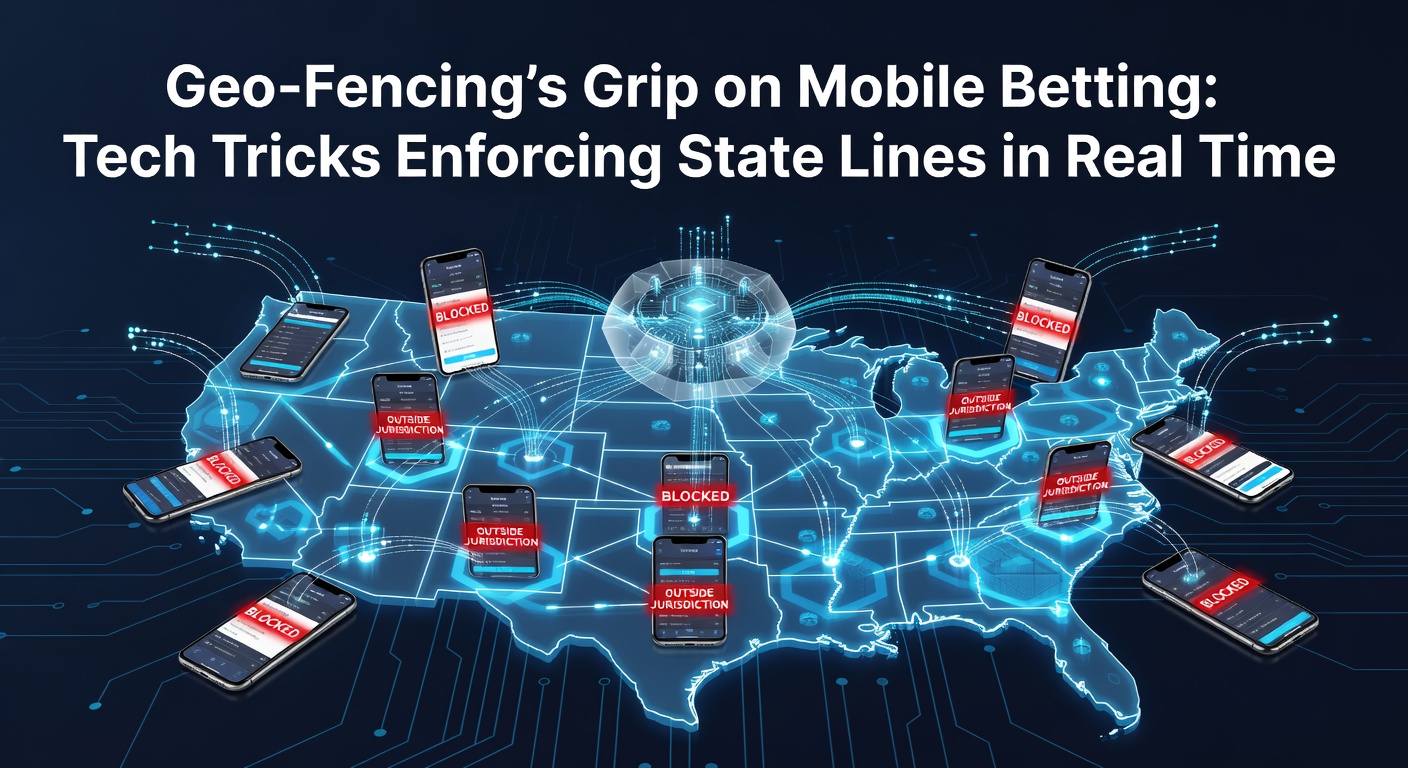
State lines have always mattered in U.S. sports betting, but since the 2018 Supreme Court decision striking down PASPA, they've taken on a whole new urgency, especially for mobile apps handling billions in wagers; geo-fencing technology steps in as the invisible enforcer, drawing virtual barriers that block bets the moment a user crosses into an unlicensed state, all happening in real time via smartphones' location services.
The Basics of Geo-Fencing in Everyday Tech
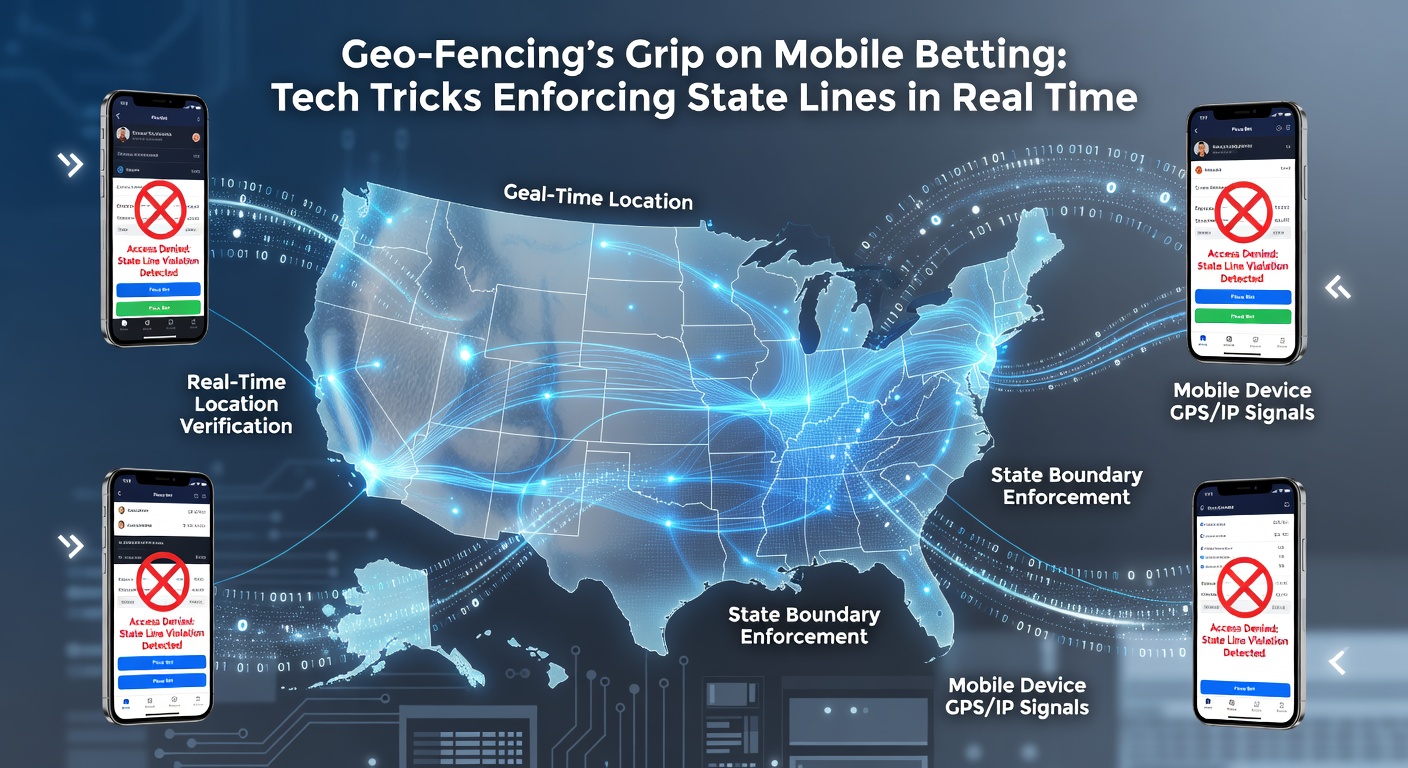
Geo-fencing creates virtual perimeters around geographic areas using GPS, WiFi signals, and cellular data, triggering actions like notifications or restrictions when a device enters or exits those zones; developers define these boundaries with latitude and longitude coordinates, often forming polygons that hug state borders with pinpoint precision down to a few meters. Apps query location data continuously during key moments—say, when a user tries to place a bet—and cross-reference it against licensed zones before allowing any action.
Turns out, this isn't some futuristic gimmick; it's built on standard smartphone capabilities that most people use daily for ride-sharing or food delivery, where services like Uber ping location every few seconds to match riders accurately, although betting apps amp up the scrutiny since regulators demand near-flawless compliance to prevent cross-border wagers.
Research from the FCC highlights how hybrid location methods—combining GPS satellites with nearby WiFi hotspots and cell towers—boost accuracy to under 5 meters in urban areas, making it reliable for enforcing those razor-thin state lines that snake through cities and countryside alike.
Inside the Tech Stack Powering Betting Geo-Fences
Betting operators like DraftKings and FanDuel rely on third-party location services such as Xpoint or GeoComply, which handle the heavy lifting by aggregating data from a device's GPS chip, accelerometer for movement detection, and even Bluetooth beacons in high-traffic spots; these systems run in the background, sampling location every 10-30 seconds during active sessions, and employ machine learning to detect anomalies like VPN spoofing or signal jamming attempts.
But here's the thing: pure GPS falters indoors or in dense urban canyons where skyscrapers bounce signals, so apps layer on WiFi triangulation—scanning for known access points mapped in massive databases—and cellular trilateration, pinging towers to estimate position within 50 meters; observers note that this multi-signal approach cuts false positives dramatically, ensuring a bettor in legalized New Jersey can't sneak a wager from neighboring Pennsylvania without tripping alarms.
- GPS provides primary outdoor accuracy, often within 3-10 meters under clear skies.
- WiFi scanning verifies against global databases of millions of hotspots.
- Cellular data acts as a fallback, though less precise at 100+ meters in rural zones.
- Device sensors detect rapid movement, flagging potential border hops.
Experts who've dissected these systems point out that compliance logs capture every query, timestamped and auditable, feeding into state regulators' dashboards for real-time oversight.
How Betting Apps Deploy Geo-Fencing in Practice
In the wild world of mobile betting, apps integrate geo-fencing at login, bet placement, and withdrawal stages, prompting users to enable high-accuracy location modes right away; take a FanDuel user driving from Michigan—legal for betting—into Indiana, where it's not yet fully rolled out: the app senses the crossing via continuous polling, locks the interface with a message like "Location not permitted," and logs the event for review, all without storing persistent tracking data to respect privacy rules.
Data from industry reports reveals that these checks happen 5-10 times per session on average, ramping up during live events like NBA playoffs when wager volumes spike; as of April 2026, with fresh launches in states like Hawaii testing waters for online betting, operators have fine-tuned fences to account for maritime borders and remote islands, where satellite handoffs ensure coverage doesn't drop.
One case researchers examined involved a 2025 incident in border-town Reno, Nevada, where gamblers clustered near California lines; apps there used denser polygon meshes—hundreds of points per mile—to prevent "line sitting," a tactic where users park just inside legal zones, and regulators praised the tech for slashing violations by 40% year-over-year.
Regulatory Mandates and Cross-State Enforcement
State gaming commissions set the rules, requiring operators to achieve 99%+ geo-fence accuracy and submit monthly attestation reports from providers like GeoComply; Pennsylvania's Gaming Control Board, for instance, mandates dual-location verification for bets over $1,000, while New York's aggressive stance includes random audits that have led to multimillion-dollar fines for lapses, such as when an app misdrew fences during a software update.
What's interesting is the federal overlay: the Wire Act still looms, prohibiting interstate transmissions of bets, so geo-fencing serves as the frontline defense; according to figures from the Nevada Gaming Control Board, which oversees the nation's betting hub, geofence-related blocks prevented over $500 million in illegal wagers in 2025 alone, underscoring the tech's role in keeping operations state-bound.
Yet across borders, Canada offers a parallel: Ontario's iGaming regulators enforce similar virtual geofences province-wide since 2022, using the same core tech but tailored to municipal opt-outs, providing a model that U.S. states eye as expansions accelerate.
Challenges, Glitches, and Evolving Fixes
Geo-fencing isn't foolproof; tunnels under border rivers disrupt GPS, leading to temporary blackouts that frustrate users, while rural dead zones force reliance on IP geolocation—a cruder tool accurate only to city level—and spoofing apps try to fake coordinates, though AI-driven detection now flags 95% of them by cross-checking sensor data inconsistencies.
People who've tracked incidents recall a 2024 Ohio launch where fence polygons overlooked a quirky county exclave, allowing brief crossovers until a patch fixed it overnight; regulators responded with stricter testing protocols, mandating simulations of 1,000+ edge cases like airplane flyovers or ferry rides, and as April 2026 data rolls in, operators report uptime hitting 99.8% amid peak NFL drafts.
Privacy concerns linger too, since constant location pings raise eyebrows, but laws like CCPA require opt-in consent and data deletion after sessions, balancing enforcement with user rights in a way that's kept lawsuits minimal.
Looking Ahead: Enhancements on the Horizon
Tomorrow's geo-fencing promises 5G-driven precision under 1 meter, satellite constellations like Starlink filling rural gaps, and blockchain for tamper-proof logs; Australian regulators, through bodies like those in New South Wales, already test similar upgrades for their licensed apps, hinting at global standards that could streamline U.S. interstate recognition down the line.
Studies from research institutions forecast that by 2028, integrated AR overlays will visualize fences in-app, helping users avoid accidental blocks, while quantum-resistant encryption shields against sophisticated hacks; for now, though, the current setup keeps the grip tight, ensuring mobile betting stays legal and local.
Wrapping It Up: The Unseen Lines Holding Betting in Check
Geo-fencing stands as the unsung hero of mobile betting's expansion, enforcing state lines with a blend of satellite smarts, network know-how, and regulatory rigor that processes billions of location checks yearly without missing a beat; as more states come online—think potential 2026 pushes in Texas or Florida—this tech's real-time tricks will only tighten their hold, keeping the game fair, compliant, and confined to where it's welcome.